

Sclerotherapy:
Spider veins, which get their name from the “web” of visible blue and red veins on the legs that become more noticeable with age, are caused by the dilation of superficial blood vessels that sit close to the skin. Those who suffer from spider veins know that not only are they visually unappealing, additional symptoms often include tiredness in the legs, swelling in the legs, and a general feeling of heaviness in the legs.
To treat this very common condition, most patients turn to Sclerotherapy. Sclerotherapy is often the best treatment for spider veins of the legs, because it is highly effective while remaining minimally invasive. The first step in the sclerotherapy treatment process is a thorough review of the patient’s medical history, followed by an examination of the spider veins that will be treated. Once complete, the treatment will take place.
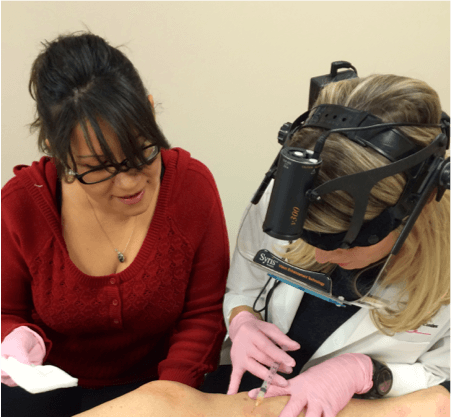
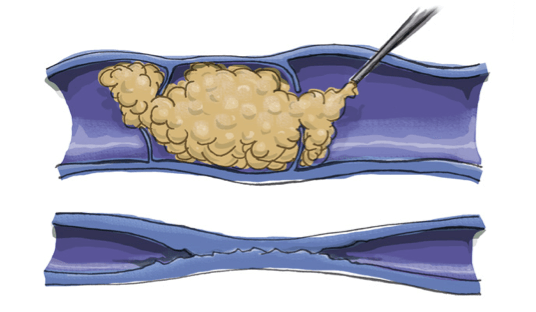
In this sclerotherapy treatment for spider veins, a chemical called a sclerosant is injected into the vein. A sclerosant causes an inflammatory reaction of the interior lining of the small spider vein making the vein scar down and disappear. Currently, we use 2 different types of sclerosants; sodium sotradecol (SOTRADECOL®) and polidocanol (ASCLERA®). Both are FDA approved drugs for the use in vein sclerotherapy. These drugs do have rare side effects, we will be happy to discuss these with you in the office.
What To Expect During Sclerotherapy Treatment:
A sclerotherapy treatment session, at one of our New York or New Jersey locations, is usually about 30 minutes long and requires no downtime. During a session, tiny needles are placed into the vein, the sclerosant is injected and pressure is held over the spider vein. The treatment is well tolerated and not that uncomfortable. Immediately following the procedure, you will be free to get up and walk around. You will be discharged from the office with your legs wrapped with ace bandages or with stockings, and can expect to return to your normal daily activities right away in most cases.
It can take several weeks for the spider vein to go through the process of scarring and disappearing. Not only will sclerotherapy remove the appearance of spider veins, it is also effective in eliminating the unpleasant symptoms brought about by spider veins including aching, burning, and swelling. Most insurance companies consider this treatment “cosmetic” and will not cover it as a stand-alone procedure.
In some cases, the vein is larger than a spider vein. In these situations, the sclerotherapy solution is mixed with carbon dioxide to form foam. Foam sclerotherapy is a safe method of treating reticular veins and small varicose veins. When performed by a trained professional, the risks of sclerotherapy are minimal, and can include bruising, small skin sores, or raised red areas. More severe reactions are incredibly rare.
Sclerotherapy for Spider Veins
Sclerotherapy is the gold-standard treatment for spider veins on the legs — the fine red, blue, and purple vessels that branch across the thighs, calves, and ankles. Because spider veins sit close to the surface, a small amount of liquid sclerosant is usually all it takes to close them. Treatment is quick, requires no anesthesia, and most patients need just one to three sessions for clear, lasting results.
Beyond appearance, treating spider veins can relieve the aching, burning, and heaviness that often accompany them. If your spider veins are widespread or keep returning, we’ll also check for underlying reticular or feeder veins — treating those first often improves the final result. Learn more on our spider vein treatment page.
Sclerotherapy for Varicose Veins
For smaller varicose veins and reticular veins, foam sclerotherapy offers an effective, minimally invasive option. Here the sclerosant is mixed with carbon dioxide to create a foam that displaces blood inside the larger vessel, maximizing contact with the vein wall so it collapses and seals. Foam is particularly useful for veins that are too large for standard liquid sclerotherapy but don’t require a catheter-based procedure.
Larger, rope-like varicose veins with underlying valve failure are usually better treated with ablation — but sclerotherapy frequently plays a supporting role, cleaning up residual veins after an ablation procedure. Explore all your options on our varicose vein treatment page.
Sclerotherapy Across New York & New Jersey
Palisades Vein Center is the number one choice among patients searching for sclerotherapy in New York and New Jersey within the greater region. Our experienced and highly knowledgeable vascular surgeons are trusted time and time again because of their wealth of training and continued success, in addition to the unmatched access they have to the latest treatment equipment for the treatment of venous disease. By selecting Palisades Vein Center to perform the treatment for your varicose veins, you are making the quality, convenient, and affordable choice you will not regret. Plus, our vein specialists are standing by 24/7 to answer any of your questions or concerns.
You’ll find expert sclerotherapy close to home at six convenient locations: White Plains (Westchester County), New City and Pomona (Rockland County), Goshen (Orange County), Fishkill (Dutchess County and the Hudson Valley), and Englewood, NJ — minutes from the George Washington Bridge and serving Bergen County and the greater NYC metro area. For sclerotherapy in New York and New Jersey, Palisades Vein Center is the certified treatment facility you deserve.
Sclerotherapy FAQs
Sclerotherapy is a minimally invasive treatment for spider veins and small varicose veins. During the procedure, a chemical solution called a sclerosant is injected directly into the affected vein using a very fine needle. The solution irritates the inner lining of the vein, causing it to scar down, collapse, and gradually fade from view. At Palisades Vein Center, we use two FDA-approved sclerosants — Sotradecol® (sodium tetradecyl sulfate) and Asclera® (polidocanol) — chosen based on the size and type of vein being treated.
Sclerotherapy is suitable for most adults with spider veins or small varicose veins who are not pregnant or nursing. During your initial consultation, our vascular surgeons will review your medical history, examine the veins being considered for treatment, and evaluate for any underlying venous insufficiency. Patients with a history of deep vein thrombosis (DVT), known allergies to sclerosants, or certain circulation conditions may require alternative treatment options — your provider will discuss the best approach for your specific situation.
Foam sclerotherapy is a variation used to treat larger veins, such as reticular veins and small varicose veins, that don’t respond as well to standard liquid injection. The sclerosant is mixed with carbon dioxide to create a foam, which displaces blood more effectively in the larger vessel and allows better contact between the solution and the vein wall. At Palisades Vein Center, your provider will determine whether liquid or foam sclerotherapy — or a combination — is most appropriate based on the size and type of veins being treated.
A typical sclerotherapy session at Palisades Vein Center takes approximately 30 minutes, though this can vary depending on the number and size of veins being treated. The procedure is performed in-office with no anesthesia required. You will be free to get up and walk immediately afterward, and in most cases you can return to your normal daily activities the same day.
Results are not immediate — the treated vein needs time to scar down and be reabsorbed by the body. Spider veins typically begin to fade within 6 to 8 weeks. Larger veins may take 3 to 4 months to show full improvement. It’s also normal for veins to appear slightly darker immediately after treatment before they begin to fade. Most patients see a significant improvement of 50–80% or more after a single session, with follow-up treatments used to fine-tune results.
The number of sessions needed varies from patient to patient depending on the extent of the veins being treated, the types of veins, and how your body responds to treatment. Many patients achieve satisfying results in one to three sessions. Some cases with more extensive veins may require additional visits. Sessions are typically spaced several weeks apart to allow the treated veins time to respond before the next treatment is performed.
Veins that respond successfully to sclerotherapy are permanently closed and will not return. However, sclerotherapy does not prevent new spider veins or varicose veins from developing over time, particularly if underlying factors such as genetics, hormonal changes, or prolonged standing contribute to ongoing vein formation. If new veins appear in the future, they can be retreated with additional sessions.
Sclerotherapy is well tolerated by the vast majority of patients. You may feel a mild prick when the needle is inserted, and some patients notice a brief burning or cramping sensation as the sclerosant is injected — this typically passes within a few minutes. No anesthesia is required. Most patients find the procedure significantly more comfortable than they anticipated, and are able to resume normal activities immediately after leaving the office.
Immediately following your sclerotherapy session, compression bandages or compression stockings will be applied to your legs. You’ll be encouraged to get up and walk right away — movement promotes healthy circulation and supports the treatment. You can expect to return to normal daily activities the same day in most cases. Mild itching at the injection sites on the evening of treatment is the most commonly reported side effect and is temporary.
Common and temporary side effects include bruising at the injection sites, mild itching, raised red areas that resolve within a few days, and temporary skin discoloration (light brown streaks or spots) that typically fades within 3 to 6 months. In some cases, larger treated veins may feel lumpy or firm for several months before fully resolving. More serious side effects — such as allergic reactions, ulceration, or blood clots — are rare when the procedure is performed by a trained vascular specialist. Your provider at Palisades Vein Center will review all potential risks with you during your consultation.
For the best results and to minimize complications, patients are generally advised to: avoid sun exposure and tanning on the treated areas until all bruising has resolved (UV exposure to inflamed skin increases the risk of pigmentation); avoid strenuous exercise and heavy lifting for approximately two weeks; avoid prolonged sitting or standing without movement; and avoid long-distance travel (flights or extended car trips) for at least two weeks, as immobility increases the risk of clot formation. Do not apply lotion to your legs immediately before or after treatment. Your provider will give you personalized post-care instructions at your appointment.
Sclerotherapy for spider veins is a cosmetic procedure, and as such, payment is due at the time of treatment — we do not bill insurance directly. That said, depending on your plan, your insurance company may partially reimburse you after treatment. We recommend contacting your insurer directly to understand your out-of-pocket costs and reimbursement options. Our team is happy to provide any documentation you may need to submit a claim on your own behalf.
Sclerotherapy is not recommended during pregnancy or while nursing. Pregnancy is one of the most common contributors to spider vein development due to increased blood volume and hormonal changes, but many pregnancy-related veins resolve on their own after delivery. If they do not, sclerotherapy can be safely performed after pregnancy and breastfeeding are complete. Always inform your provider if there is any possibility you are pregnant before scheduling treatment.
No referral is required to schedule a consultation at Palisades Vein Center. You can contact us directly at any of our six convenient locations across New York and New Jersey. Our vascular specialists will conduct a thorough evaluation during your first visit and recommend the most appropriate treatment plan for your needs.
Before your sclerotherapy session, avoid applying lotion, sunscreen, or oil to your legs on the day of treatment. Wear loose, comfortable clothing and consider bringing a pair of shorts to wear during the procedure. Let your provider know about all medications and supplements you are currently taking — you may be advised to pause blood thinners, aspirin, or NSAIDs in the days prior. Arrange to have someone drive you home if needed. Your provider will give you a full list of pre-treatment instructions at your consultation.