
What Is Vein Ablation?
Vein ablation (also called venous ablation or endovenous ablation) is a procedure that permanently closes a malfunctioning vein. Varicose veins form when the one-way valves inside a vein fail, letting blood flow backward and pool — a condition called venous reflux. Ablation seals that faulty vein shut so blood automatically reroutes through nearby healthy veins. The closed vein is then gradually absorbed by the body.
Ablation replaced vein stripping surgery decades ago for most patients, and for good reason: it’s performed in-office under local anesthesia, takes under an hour, and most people walk out and return to normal activities the same day.

Types of Vein Ablation at Palisades
There are three main ways to close a diseased vein — heat, laser, and medical foam. We offer them all, which means our recommendation is based on your veins, not our equipment.
Radiofrequency Ablation (RFA)
A thin catheter delivers controlled heat energy along the vein wall, causing it to collapse and seal. RFA is one of the most widely used and well-studied ablation methods, with excellent long-term closure rates and minimal post-procedure discomfort. Learn more about RF ablation →
Endovenous Laser Ablation (EVLA)
Laser ablation works on the same principle as RFA but uses targeted laser energy instead of radiofrequency heat to close the vein. It’s a proven option for certain vein anatomies.
Varithena (Chemical Ablation)
Varithena is an FDA-approved microfoam injected directly into the vein — no heat, no catheter-based thermal energy. The foam displaces blood and causes the vein to collapse and seal. It’s especially useful for veins that are twisted or difficult to treat with a catheter. Learn more about Varithena →
The Vein Ablation Procedure: What to Expect
- Ultrasound mapping — we identify the diseased vein and confirm venous reflux with a duplex ultrasound
- Local anesthesia — the treatment area is numbed; no general anesthesia is needed
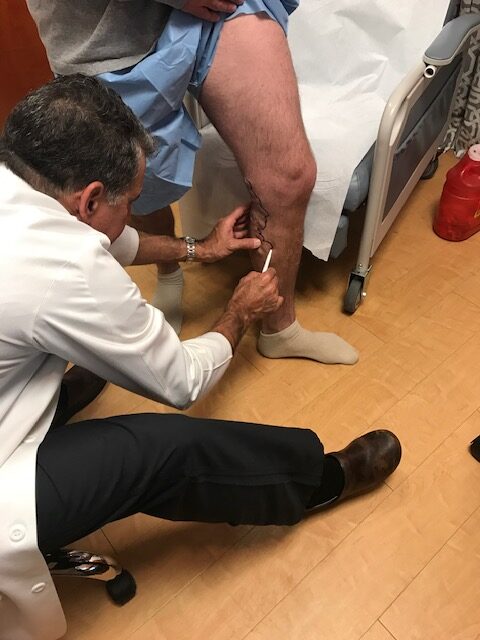
- Closure — using ultrasound guidance, your specialist closes the vein with heat, laser, or foam, depending on your treatment plan
- Walk out — the procedure typically takes 30–60 minutes, and you’ll be encouraged to walk immediately afterward to promote circulation
Most patients wear compression stockings for a short period after treatment and return to work the same or next day. We recommend holding off on high-impact exercise, heavy lifting, and hot tubs for about a week.

Is Vein Ablation Safe?
Yes — vein ablation has a strong safety record and is considered the standard of care for venous reflux. Because the procedure is performed under ultrasound guidance by a specialist, treatment is precise and complications are uncommon. The most frequent side effects are mild: bruising, tenderness, or a feeling of tightness along the treated vein that resolves within days to weeks.
It’s also worth knowing that closing a vein is not harmful to your circulation. The vein being treated is already malfunctioning — blood is flowing backward through it. Once it’s closed, blood reroutes through healthy veins, and circulation typically improves, along with symptoms like heaviness, aching, and swelling.
As with any medical procedure, outcomes depend heavily on proper diagnosis and technique — which is why treatment should always start with a thorough ultrasound evaluation, and why choosing an experienced vein specialist matters. For a deeper look at what to ask before choosing a provider, see our guide: Vein Ablation: What You Need to Know.
Vein Ablation vs. Other Treatments
| Vein Ablation (RF / Laser / Varithena) | VenaSeal | Sclerotherapy | Vein Stripping (old method) | |
|---|---|---|---|---|
| Best for | Larger varicose veins with reflux | Larger veins; patients avoiding heat/tumescent anesthesia | Smaller varicose & spider veins | Rarely recommended today |
| Anesthesia | Local | None/minimal | None | General |
| Downtime | Same day | Same day | None | Weeks |
| How it works | Heat, laser, or foam closes the vein | Medical adhesive seals the vein | Injection collapses small veins | Vein surgically removed |
Not sure which is right for you? That’s exactly what your consultation is for — many patients get the best results from a combination approach. You can also explore VenaSeal and all varicose vein treatments.
Vein Ablation FAQs
The procedure is performed under local anesthesia, and most patients report little to no pain — typically just pressure or mild pinching during numbing. Afterward, mild soreness or tightness along the vein is normal and short-lived.
Most patients return to normal activities within 24 hours. Symptom relief — less aching, heaviness, and swelling — is often noticeable within a few weeks, with continued improvement as the treated vein is absorbed.
Modern ablation methods have high closure rates, and treated veins do not reopen. Because vein disease is progressive, new varicose veins can develop over time, which is why periodic follow-up is recommended.
Usually, yes — when it’s medically necessary. If you have symptoms like leg pain, swelling, or heaviness and an ultrasound confirms venous reflux, most insurance plans cover ablation. We verify your coverage before treatment begins.
All three permanently close the diseased vein — the difference is the method: radiofrequency heat, laser energy, or injected microfoam. The right choice depends on the vein’s size, shape, and location, which we determine with ultrasound at your consultation.
In most cases, yes. Because only local anesthesia is used, most patients drive themselves home and resume their day.
Explore Our Ablation Treatments
Quick links to each ablation method and related treatments.
Book Your Free Vein Ablation Consultation
Find out whether vein ablation is right for you. Book a free consultation — including an ultrasound evaluation — at any of our six NY & NJ locations.
Book Now Call (845) 362-5200